Minimalist interiors are more than just a “trend”
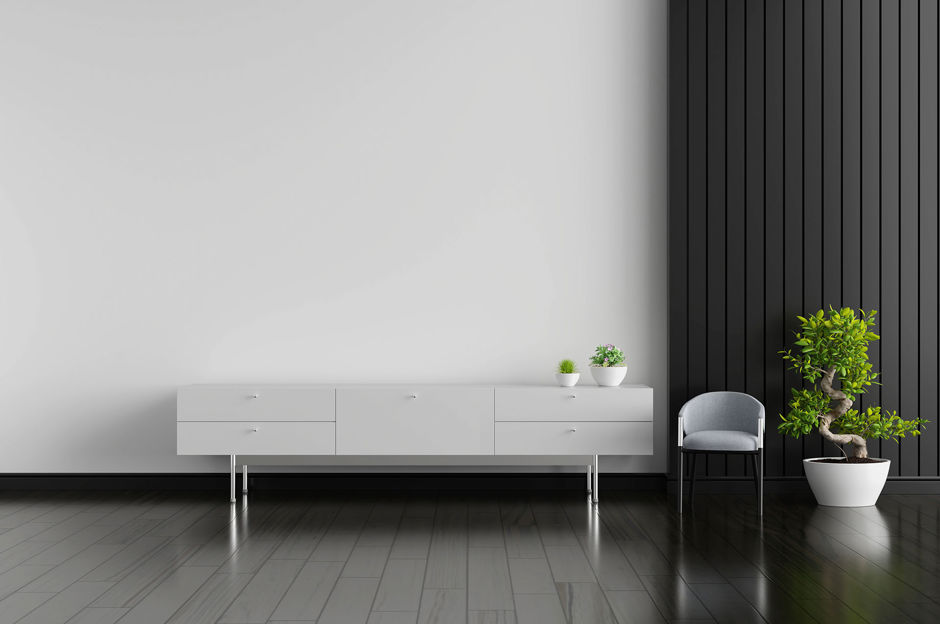
Minimalist interiors appeal to us not only with their simple and straightforward aesthetics, but above all with the functionality and peace of mind they bring. A clear environment helps us to concentrate better, reduces stress and simplifies everyday life. And it doesn’t mean that you have to throw away half of your possessions right away. Minimalism is a process in which you consciously choose what to keep in your space and what to do without.
You may know the feeling yourself when you are trying to work or relax, but out of the corner of your eye you still see a pile of clothes, an overcrowded shelf or a “drawer of horror” where everything is stored. Minimalist interiors are not about perfection, but about these piles gradually shrinking and your home starting to respond to how you want to live, not how many things you manage to fit in it.
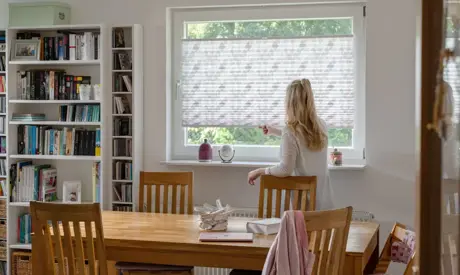
Minimalism also does not mean a cold or sterile space. On the contrary: when you remove the excess, quality materials, pleasant colors, textures and accessories such as family photos, a favorite painting, a comfortable chair by the window or quality curtains or Japanese walls that work with light will begin to stand out.
Japanese minimalism
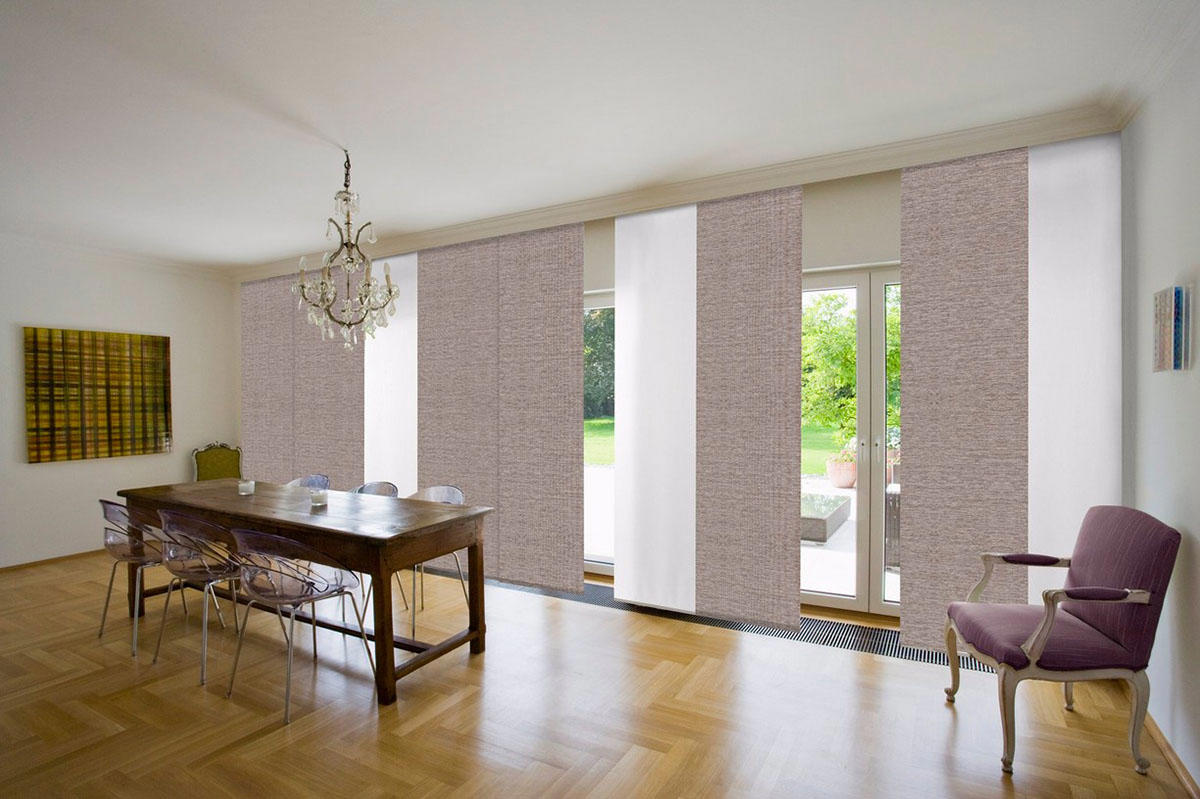
Japanese culture has long been associated with minimalism. We know traditional Japanese interiors, where there is a minimum of things and storage space. Sliding panels, so-called Japanese blinds or Japanese walls often play an important role in them. Japanese walls are a great example of how to combine functionality with clean design and at the same time work effectively with space. You can also perfectly integrate them into a purely Central European interior. They are available in a wide range of designs, among which everyone can choose. If that is not your intention, it does not even have to resemble a space for a tea ceremony.
In traditional Japanese houses, the main concept is "ma" = free space between things. It is not "empty", but a kind of breath of the interior. We often tend to fill every corner with furniture or decorations, while Japanese minimalism lets the space breathe. And shading techniques, such as Japanese walls, can work beautifully with this: they allow you to divide a room into zones without making it unnecessarily crowded.

How do Japanese walls help minimalism?
Japanese walls are fabric panels on a ceiling or wall rail that can be easily moved. This makes them:
- You separate individual functional zones, such as a work area in the living room or a dressing room in the bedroom.
- You cover storage spaces such as built-in wardrobes, shelves or technical facilities that you do not want to have in sight all the time.
- You work with light according to the chosen material and the colors either transmit the light or partially dim it.
- You support a simple design - large, flat areas of fabric without unnecessary details that look clean and tidy.
It is the combination of simple furniture, economical colors and thoughtful shading that creates an interior that feels restrained, calm and cozy at the same time.
Start with minimalism step by step
First, we have some bad news for you: minimalism requires you to declutter and get rid of excess items. Minimalism and clutter are polar opposites. The good news is that the process of getting rid of things doesn’t have to be as difficult as it seems at first. You just need to proceed systematically and celebrate your progress.
Minimalism is a long-term change, not a one-time “cleaning spree.” You don’t have to do your entire apartment in one weekend. On the contrary, it’s often better to go slowly: room by room, closet by closet. This will also help you get used to the new rules of the game: fewer things, but better quality and more thoughtful ones.
How to sort effectively?
Go through the rooms, or in the case of large and complex spaces, through individual cabinets and drawers. Always create three piles and put each item in one of them. Keep the items in the first pile, sell or donate the second, and throw away or recycle the third. Don’t fall into the trap of “it might still be useful.”
Here are a few rules to follow:
- Have I used it in the last two or three years? If not, it probably isn’t worth taking up space in my home.
- Marie Kondo’s somewhat profane method is: Does this thing bring me joy? If it does, keep it; if it doesn’t, get rid of it! Skeptics will point out that socks or a broom bring them no joy and yet it would be foolish to get rid of them. But even if we extend the rule to cases where “it doesn’t bring me joy, but I can’t live without it,” we will still most likely find a lot of things that don’t meet either condition.
- One thing in, one out. A simple rule according to which for every thing brought into the household, another must go.
- Duplicates, get rid of them! While it’s good to have more than one of some things, there’s no point in keeping unnecessary reserves for most things when you can always go to the store for a replacement. How many bathrobes, mops, or cake tins can you use at one time?
Once you've gone through this process, it's the perfect time to think about how you want to repurpose the space and how smart furniture layout and shading technology can help you do that.
Minimalism in individual rooms
Living room
The living room is often the most crowded. You will find tables, shelves, display cases, a TV stand, a work area, a gaming area... A minimalist approach can look like this:
- Keep only one dominant piece of seating (a comfortable sofa) and complement it with a maximum of one armchair.
- Limit the number of small decorations, replace them with several larger, quality pieces.
- Do not cover the windows with heavy curtains with ruffles, instead use sheer fabric blinds, Japanese walls or venetian blinds that let the light and the view stand out.
- If you also have a work area in the living room, you can separate it with a Japanese wall. When you are finished working, you simply pull the panel and visually cut yourself off from it.
Bedroom
In the bedroom, minimalism has a huge impact on the quality of your sleep. Less visual clutter = fewer stimuli before bed.
- Store your clothes in closed cabinets, as open shelves look untidy.
- If you don’t have a built-in wardrobe, you can cover it with a Japanese wall on a rail. This will give you a clean surface instead of a “jagged” line of doors, shelves and various boxes.
- Choose muted colors and soft materials. For shading, choose fabrics that either darken the room or at least significantly dim the light from the street.
Kitchen and dining room
A minimalist kitchen doesn’t mean you can’t cook, quite the opposite. When you know where everything is and the work surface isn’t cluttered with appliances and spices, cooking is faster and more enjoyable.
- Leave only what you use every day on the line, the rest can be tidied up.
- Fill open shelves less and thoughtfully, so that beautiful pieces of crockery stand out better.
- If the kitchen is connected to the living room, Japanese walls or sliding panels will allow you to visually separate the dining area or hide the work area when you have guests.
How does shading support a minimalist interior?
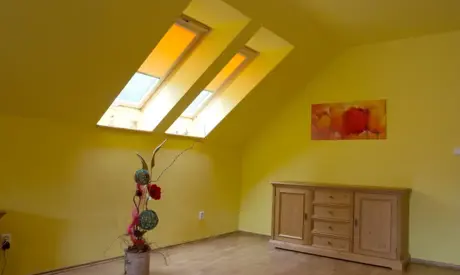
Minimalism is not only about the number of things. Light also plays a huge role during the day and evening. A properly chosen shading technique can soften, unify and give the interior a Japanese-style calm atmosphere.
Japanese walls as a practical and decorative element
In addition to zoning the space, Japanese walls are also suitable as an alternative to classic curtains and drapes. Unlike them, they create straight panels without folds, which visually calms the space. You can choose:
- Single-colored light fabrics for a clean, airy look.
- Natural tones (beige, sand, light gray), which go great with wood, concrete and modern kitchens.
- Decorative panels with a subtle motif. You can use them for just one panel, which will become a discreet dominant.
Other types of shading technology in a minimalist interior
Other modern shading elements are also well suited to minimalism:
- Fabric blinds - simple, functional, with a wide range of fabrics from translucent to blackout.
- Plissé blinds - excellent for segmented windows, winter gardens and places where you need to finely regulate light.
- Horizontal and vertical blinds - in neutral colors and thin slats, they can look very elegant and minimalist.
It is important to have a clear color concept: preferably fewer colors and motifs, but high-quality and coordinated ones.
Minimalism as a lifestyle, not just a trend
If you are attracted by the idea of having fewer things at home, but you are not sure whether minimalism is "for you". It is good to remember here that it is not a competition in who has the emptiest apartment, but about consciously deciding what you let into your home and what you do not.
Minimalism can simply mean that:
- you think twice about every new thing,
- you prioritize quality over quantity,
- you keep basic order in storage spaces,
- you work with space in a way that supports your daily routine
Japanese inspiration in minimalism and the use of Japanese walls or other types of shading technology can help you significantly with this. Your home will be clearer, more functional and at the same time unique, not sterile like a catalog.
A minimalist interior may not solve all your worries, but it can become a solid point in your daily hustle and bustle. When there are fewer things at home and everything has its place, it is easier to clean, work, relax and spend time with loved ones. Japanese inspiration, Japanese walls, sliding panels and thoughtful shading technology can be one of the tools to achieve this.
If you are wondering how to bring a minimalist approach to your own interior and which Japanese walls, roller blinds or shutters would suit you best, contact our company ISOTRA. We will be happy to answer all your questions and help you with your selection.