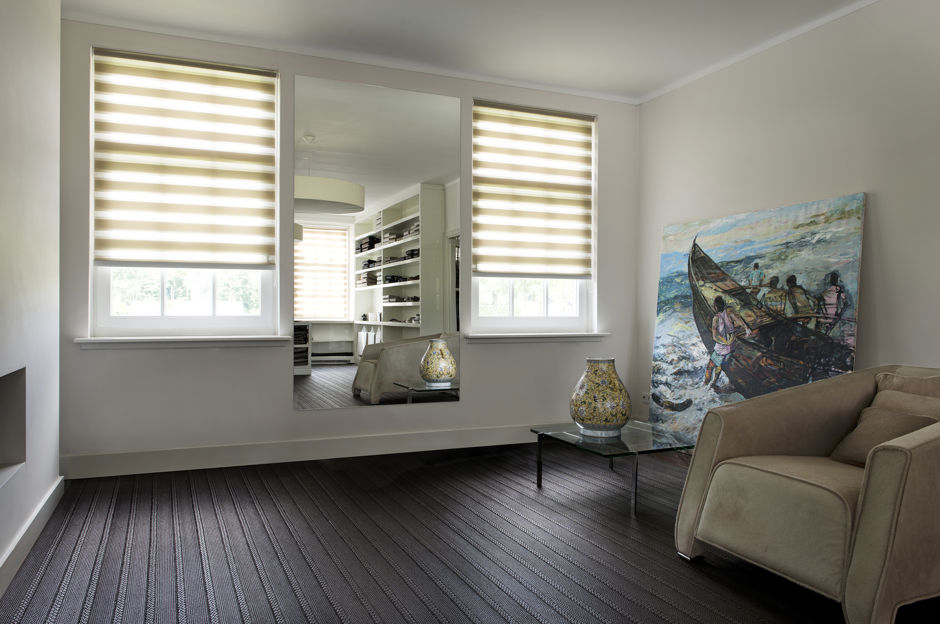
We are going to explain what makes day-and-night roller shutters special, where they make sense and how to choose the right ones so that they serve well in everyday use.
How day-and-night roller shutters work
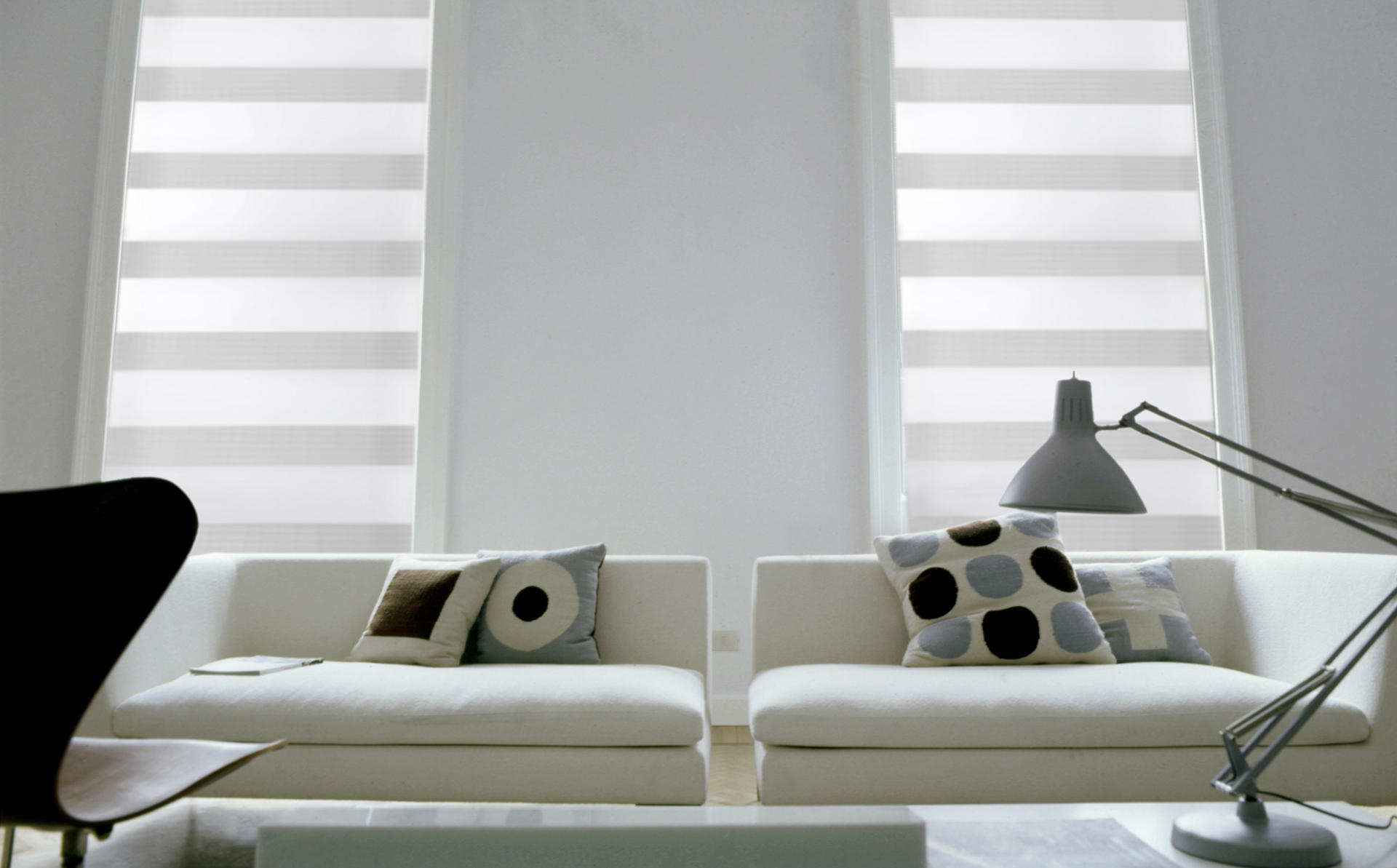
The principle is simple, but extremely effective. The roller shutter is made of two layers of fabric, on which transparent and opaque stripes alternate. As you move the fabric up or down, the stripes overlap each other - creating the effect of "day" (when the transparent parts meet) or "night" (when the blackout parts overlap).
The light regulation is smooth, so there is no need to fully pull up or pull down the roller shutter. With a simple movement, you can adjust the light exactly as needed during the day - from a gentle light filter to significant darkening. This principle applies to ordinary windows, balcony doors and French windows.
Main advantages of day-and-night roller shutters
1. Smooth light regulation
The biggest advantage is the ability to set exactly the amount of light that is needed for a given part of the day. In the living room, they create pleasantly diffused light, in the den they can reduce glare and they create a calmer atmosphere in the bedroom. For rooms where higher light attenuation is needed, there are also day-and-night blackout roller shutters.
2. Privacy protection
The system of alternating stripes can prevent direct views from outside in the interior without having to completely pull down the roller shutter. This will be especially appreciated by households on the ground floor, near busier streets or in rooms with large glazing.
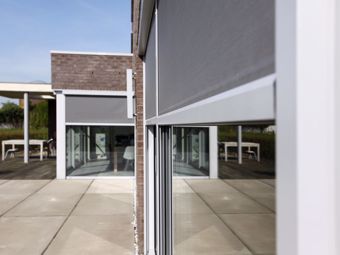
Day-and-night roller shutters are therefore often used as roller shutters on French windows or balcony doors.
3. Use in most rooms
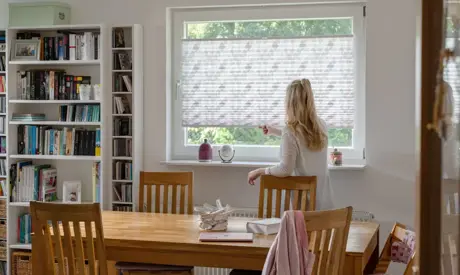
Day-and-night roller shutters are suitable for most living spaces - living rooms, bedrooms, children's rooms and home offices. In a normally ventilated kitchen, they will provide pleasant dimming of light, unless it is a room with excessive humidity or grease.
On the other hand, they are not very suitable for very humid bathrooms or just above cooking surfaces.
4. Clean and modern design
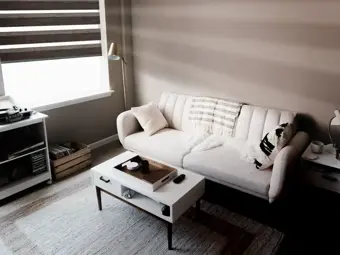
Thanks to their simple appearance, day-and-night roller shutters can easily be integrated into minimalist interiors as well as cosily furnished rooms. The range of fabrics includes various colours, structures and stripe widths, so it is possible to match the roller shutter with furniture, wall colour or, conversely, use it as a more distinctive decorative element.
Lighter shades have an airy effect and leave the space visually open, while darker or structured fabrics can add a more distinctive accent to the interior.
5. Variable installation according to the type of window
Day-and-night roller shutters allow for various installation methods, which makes it easier to adapt them to a specific type of window and interior design. Classic installation types are stable, look clean and allow for precise alignment with the interior and practical requirements of the space.
There are also variants on the market that do not require drilling, which are attached to the window frame using special brackets. These systems are particularly practical where it is not possible to interfere with the window structure, but their design and service life may vary depending on the manufacturer. Therefore, it is advisable to consider them with regard to the specific type of window and the expected use.
How to choose suitable day-and-night roller shutters
When choosing day-and-night roller shutters, it is good to take into account several practical factors that are related to both the specific room and the lighting conditions. The orientation of windows plays an important role — rooms facing south or west require a higher degree of light regulation, so choosing a blackout fabric may be worthwhile. On the contrary, in interiors with a lack of daylight, lighter, semi-transparent fabrics work better, which optically lighten the space.
Another criterion is the way the room is used. In bedrooms or offices, the emphasis is on dimming light and privacy, while in the living room or kitchen, it is more about pleasant light diffusion during the day. The width of the stripes also plays an aesthetic role — for larger glass surfaces, wider stripes can look harmonious and visually unify the entire window area, while for smaller windows, a finer division is more appropriate.
The installation method should be chosen according to the type of window and the use in the room; the most common is attachment to the window frame, wall or ceiling, while drill-free systems can be a solution where it is not possible to interfere with the structure.
If you are not sure about the combination of fabric, stripe width and installation, it pays to seek professional advice. The correctly selected design will ensure uniform shading, convenient operation and aesthetic harmony with the interior.
FAQs
Are day-and-night roller shutters suitable for balcony doors?
Yes, day-and-night roller shutters for balcony doors are a common solution if you choose a stronger fabric and suitable installation. The roller shutter holds its shape well when the door is opened and allows for convenient light regulation.
Can day-and-night roller shutters be used on French windows?
Yes. Day-and-night roller shutters on French windows are used very often because they allow for continuous shading on large glass surfaces and have a clean and elegant look.
Are there day-and-night roller shutters without drilling?
There are also day-and-night roller shutters without drilling on the market, which are attached to the window frame using special brackets. Their suitability depends on the type of window and method of use.
Are day-and-night roller shutters suitable on roof windows?
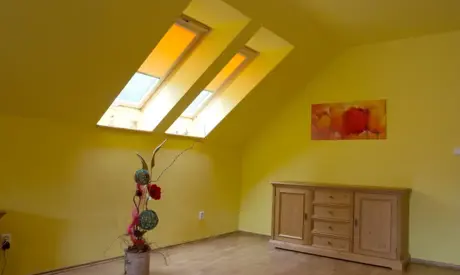
No — day-and-night roller shutters on roof windows are usually not used because they require a vertical plane and free guidance of fabric. For slanted windows, roller shutters in a cassette with side rails or pleated roller shutters are more suitable.
Do day-and-night roller shutters also have a blackout option?
Yes, day and night blackout roller shutters are also manufactured for bedrooms or offices, which significantly reduce the passage of light.