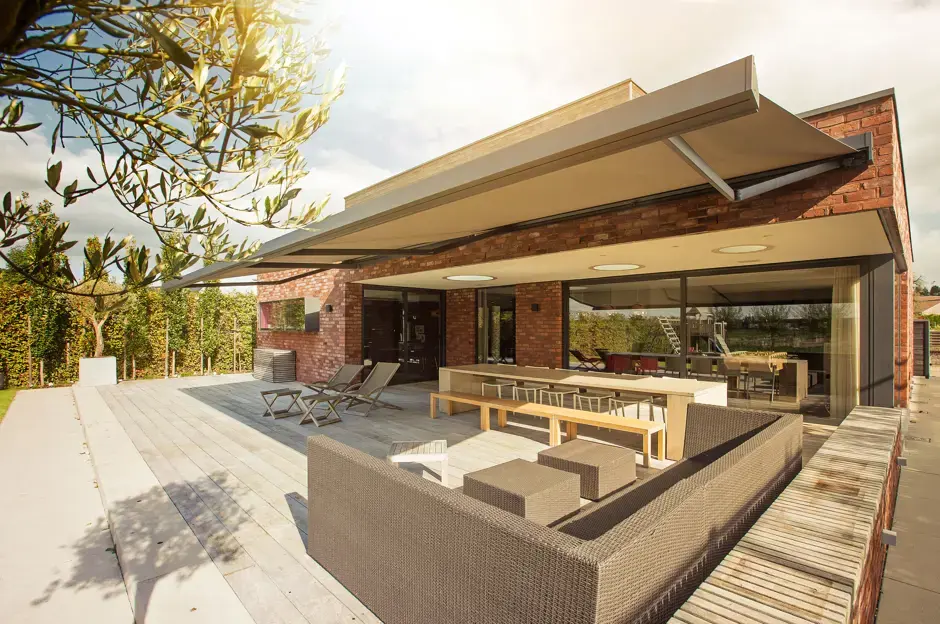
But they work just as well in a private space. On balconies and terraces, they can create a pleasant background for everyday use without having to reach for a solid roof. It is their simplicity and the ability to respond to current conditions at any time that makes them a popular solution for modern living.
Typically, it is a textile shading system fixed to wall or other structure, which is extended using arms. However, not every awning is suitable for every space - one type makes sense for a balcony, another for a terrace.
Which types of awnings are there?
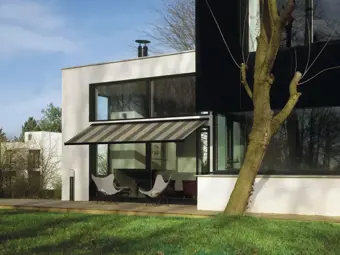
The basic type is a retractable awning, sometimes also referred to as an awning with hinged arms. This one is most often used on balconies and terraces and allows you to flexibly regulate the amount of shade according to the current need.
A more advanced variant is the cassette awning. In this case, the fabric and structure are hidden in a protective cassette after retraction, which protects them from rain, wind and dirt. The result is a longer service life and less maintenance.
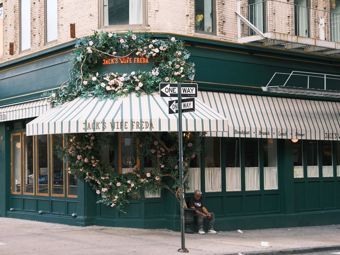
However, awnings are not only found at family houses. In public spaces, for example, basket awnings, which we know from the windows of shops or cafes, are typical. They have a solid shape and, in addition to shading, often also meet an aesthetic or advertising function.
There are also additional types of awnings for specific situations. The side awning helps to protect the space from the side – for example from the wind or the views of the neighbours. A vertical awning works similarly to a roller shutter and is particularly suitable for low sun or partial enclosure of space. A specific solution is a free-standing awning that does not require anchoring to the wall.
Balcony awning: simplicity and light construction
A balcony usually offers limited space, and the choice of awning should correspond to this. In practice, a lighter retractable awning is most often used here, which will provide sufficient shade without appearing robust or burdening the structure.
A frequent question is also the possibility of installation without interfering with the facade. The balcony awning without drilling is a solution especially for rental housing or situations where it is not possible to anchor to the wall. It is usually fixed between the floor and ceiling of the balcony using a spacer system. But it is necessary to take into account certain limits - for example, less stability in the wind or limited size.
In terms of control, lighter balcony awnings usually have a manual handle. However, if you use the balcony often and want maximum comfort, motorized control also makes sense.
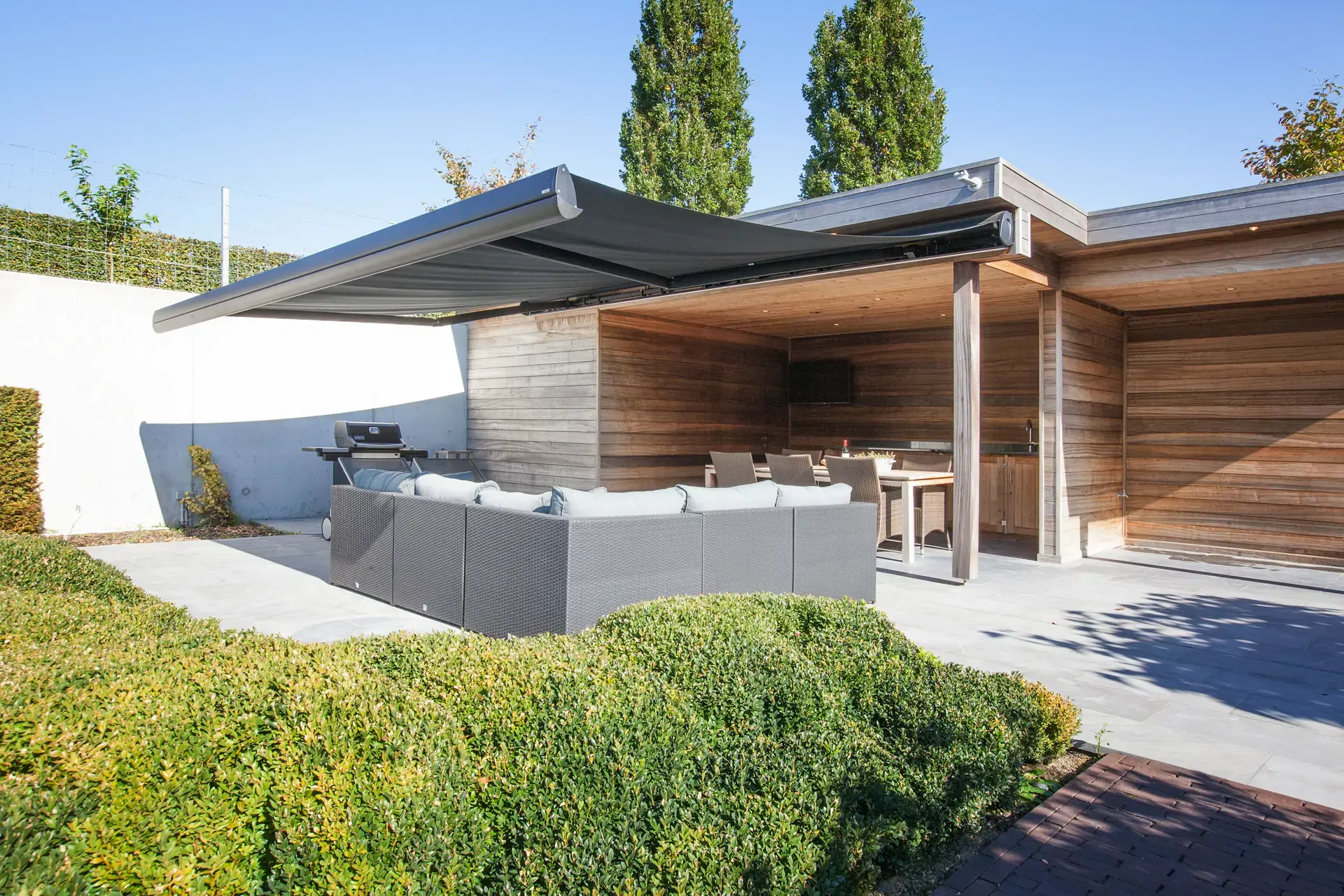
Awning for a terrace: larger dimensions, higher demands
The terrace is no longer just about shading the windows, but often about creating a full-fledged outdoor space. This corresponds to higher demands on size, construction and overall durability.
Retractable awnings for the terrace with greater extension and width are standard here. A cassette awning is often used, which protects both the fabric and the mechanism and ensures a longer lifespan even with regular use.
Larger dimensions go hand in hand with more comfortable operation. Motorized control, optionally supplemented with solar or wind sensors, allows the awning to be automatically adapted to the current conditions.
In this context, the question of whether to choose a pergola is often asked. This represents a more robust and permanent solution that allows the space to be used in virtually any weather. The awning, on the other hand, stands out for its lightness and flexibility – it will provide shade when needed, and you can simply retract it in case of bad weather. The choice therefore depends mainly on how intensively you want to use your terrace and what degree of protection from shading you expect.
Awning and weather: what rain and wind can handle
You will often come across the term rain awning. In reality, however, the awning is not a full-fledged replacement for roofing. Modern awnings use high-quality, impregnated fabrics that can handle short-term rain with no problems. However, the correct slope plays a key role - water must flow down the fabric, otherwise it could accumulate and put a strain on the structure.
An even more important factor than rain is wind. Stronger gusts can damage the awning, so it's always safer to retract it in adverse weather. For larger installations, therefore, wind sensors are often used, which automatically retract the awning.
How to make the right decision
A simpler and more subtle solution is therefore suitable for the balcony, which meets the basic function of shading. The terrace, on the other hand, offers space for a more robust construction, larger dimensions and more advanced control.
The price corresponds to this. In general, the more elaborate the solution – for example, larger dimensions, cassette construction or motorized control – the higher the investment. On the other hand, it translates into a longer service life and greater comfort during everyday use.
When choosing, it is therefore always key to start from a specific space and the way it is used. Some solutions make sense for a smaller balcony in a block of flats and others for a terrace at a family home. Orientation to the sides of the world, frequency of use and technical installation possibilities also play a role. The well-chosen awning will naturally complement the space and offer comfort exactly where you really need it.