
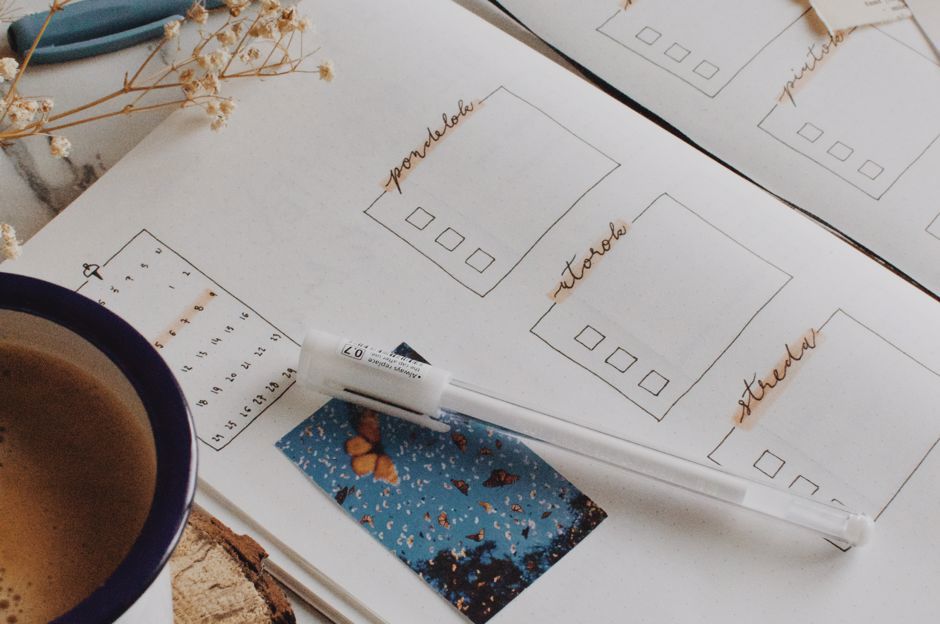
Diary types
- daily (one weekday per page, with weekend days usually sharing one page)
- weekly vertical
- weekly horizontal
- bi-weekly (two weeks on a two-page spread)
- monthly (one month on a two-page spread)
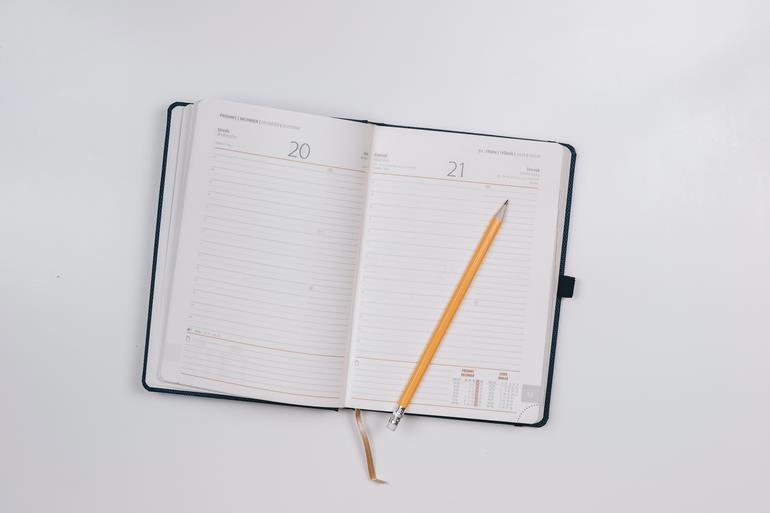
Date diary
Date diaries are the simplest choice – they fill up the store racks from October or November. Their advantages include a wide selection of cover decors, dates obvious at first glance, and favourable price. However, the cover is usually non-recyclable and the diary designer’s taste may not match yours.
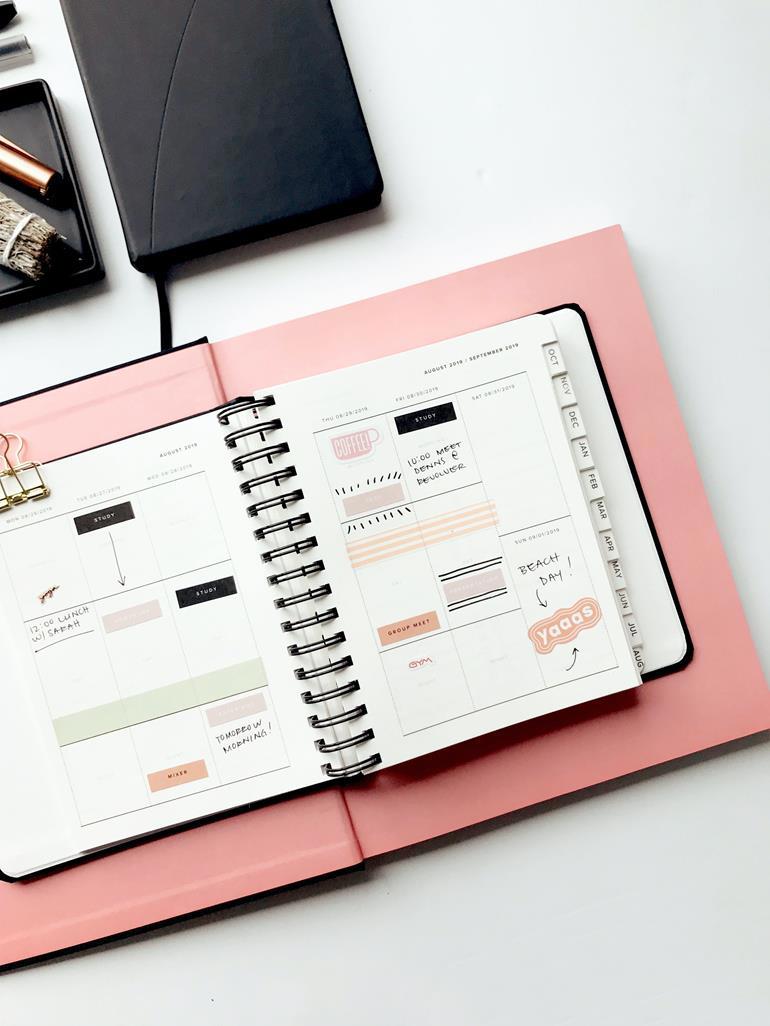
Buy a ring-bound diary with a hard cover and you will be set for years: you need only to replace the inner sheets. But with such a diary, you need to choose carefully to ensure that the format and layout really suit you, and also consider whether the cover design will still be attractive to your eye.
Undated diary
The last few years have seen a boom in undated diaries – these are available in a wide variety of internal layouts and some nearly resemble bullet journals, which will be described later. Their greatest advantage is that you can start planning on the day you buy such a diary instead of waiting until the start of the new year. Moreover, you can choose a diary that will allow you to record your daily habits, help you plan long-term goals, or add a gratitude journal to the usual functions of a diary. The disadvantage is the need to manually write in each date and the absence of saints’ days and holidays – you will have to keep track of those yourself.
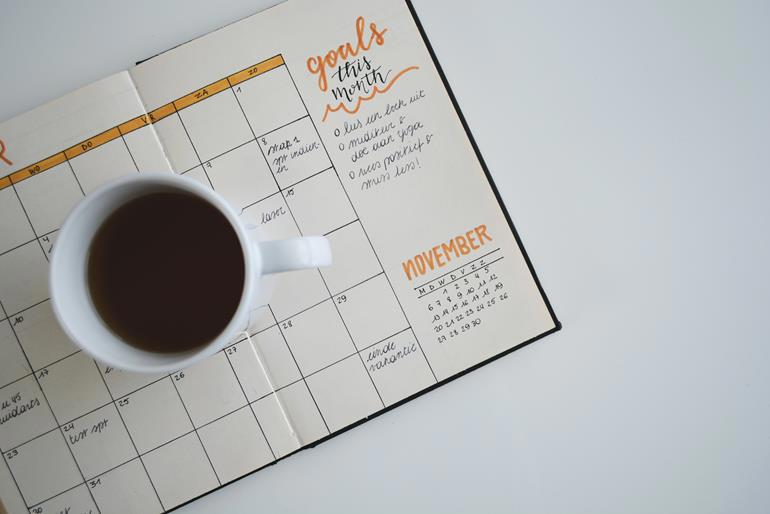
You can save time and effort with filling up an undated diary by using stickers with numbers and names of days. You can also buy stickers to remind you of birthdays, anniversaries, or dates of appointments with doctors or hairdressers, etc.
Are you creative? Make a diary from scratch!
You can use various online tools to generate and download weekly and monthly lists of the days for the specific year. After printing the sheets, align them, weigh them down, apply a flexible adhesive to the side that will form the spine, and leave to set. Then glue a cardboard cover to the spine and finish the diary to your liking – you can coat the cover with a fabric, glue felt to it, or use other materials like plywood or (faux) leather. You can also attach a two- or four-ring binder to the cover and make a diary with replaceable sheets.
Bullet journal
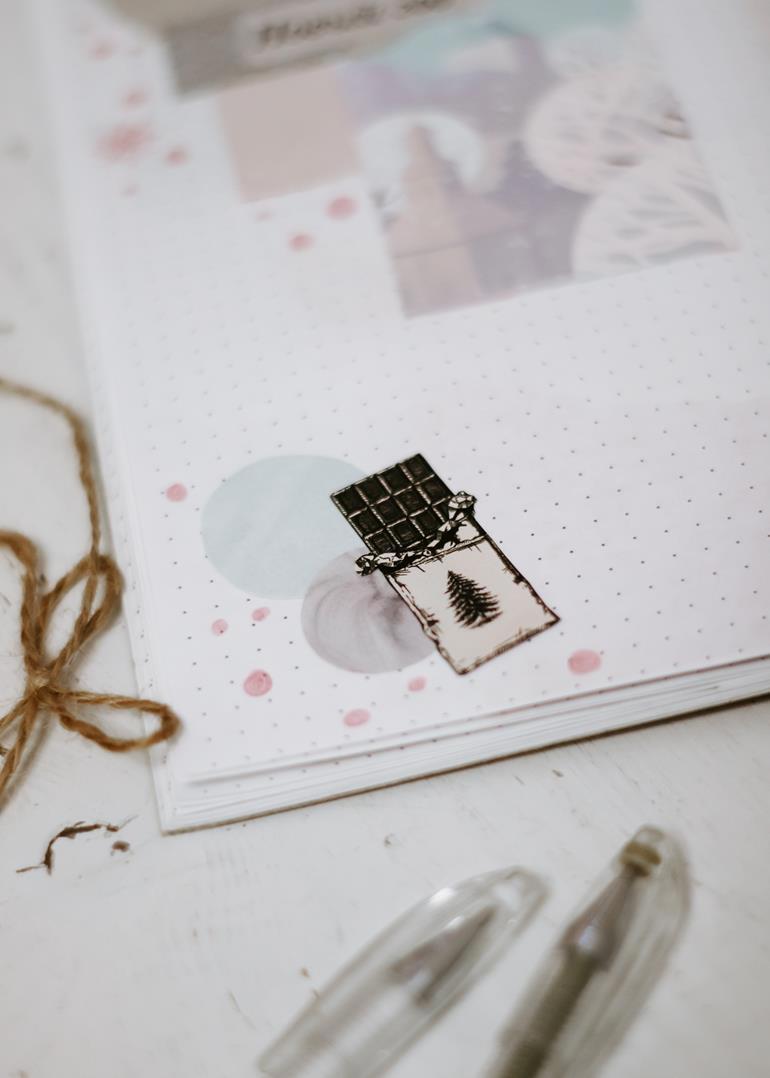
A bullet journal combines a diary and a journal. You can customise it for what you need to record or track. It is most commonly created using a dotted notebook, an ordinary pencil, and felt-tip liners of various colours. The dots form a suitable matrix to draw tables and grids, while not interfering with the overall visual style, as graph paper would. The first two-page spread of a bullet journal is usually used as an index for easy orientation – you can write there, for example, on the first two pages the days for January, followed by an overview of habit trackers for the month (you can colour in the days in the monthly grid when you succeeded in keeping a set goal – sufficient hydration, 8-hours’ sleep, your exercises, etc.). This can be followed, for instance, by a list of good books and movies, and the next two-page spread may include a detailed list of tasks and appointments for the first week of January. You are free to omit a specific type of record, reorder them, or add other content – such as a space to write down new recipes.
Not the diary type and prefer to have everything within eyesight? If you don’t live alone, try a family planning calendar with a column for each member: showing clearly when the parent-teacher meeting will take place, when the dog is to be vaccinated, when your massage is due, etc.