
1 - Materials: basis of durability and longevity
The main quality criterion is the material of the slats and the structure.
The slats should be made of aluminium, which is ideal for most exteriors because it is light, does not rust and is resistant to wind and sunlight. Wooden blinds look natural and aesthetic, but require regular maintenance and are more suitable for roofed areas.
Supporting and guiding components (such as rails, brackets or holders) should be made of steel or other solid metal, which will ensure stability of the system even with larger dimensions.
Quality exterior blinds also have a surface treatment with protection against UV radiation and corrosion, which significantly extends their lifespan.
2 - Construction details: you can tell the quality at a glance
It's not just about the appearance of the slats, but also how the entire system is constructed. These details are the ones that will tell you if your blinds will last for years without any problems:
- Slats – they should be strong, precisely shaped and with even material thickness. Quality manufacturers offer several C-, Z- or S-shaped slats that differ in appearance and functional properties.
- Z- and S-slats allow for better overlap and a higher degree of darkening, while C-slats are more versatile, more flexible and are also well suited for smaller or segmented windows.
- Guide rails – they are used to guide the slats when lowering or pulling up the blinds. Quality rails are silent and made of aluminium, firmly anchored to a frame or reveal.
- Ladder and textile tapes – should be UV stable and resistant to moisture and temperature fluctuations. Cheap variants often use thinner fabrics that lose strength over time.
- Upper box – protects the blinds in the retracted position. An aluminium box with access for service is ideal, which also ensures a clean appearance of the facade.
- Connecting components and bearings – small details that determine long service life. In quality blinds, they are made of stainless steel so that they do not oxidize even in the rain.
3 - Control: comfort that makes a difference
Modern exterior blinds can be controlled manually or electrically using a motor.
Manual control (most often with a crank) is mainly used for smaller blinds or where is no electrical distribution – for example, for smaller windows or closed balconies.
Motor control offers smooth and quiet operation and increases the comfort of everyday use. Motors are equipped with thermal and overload protection, which prevents overheating and damage to the slats when blocked.
Thanks to motor control, exterior blinds become not only functional, but also a technologically advanced element of modern living. Quality systems can be easily connected to a smart home and automatically controlled according to light intensity, temperature or time of a day.
4 - Surface finish and colours: details that determine durability
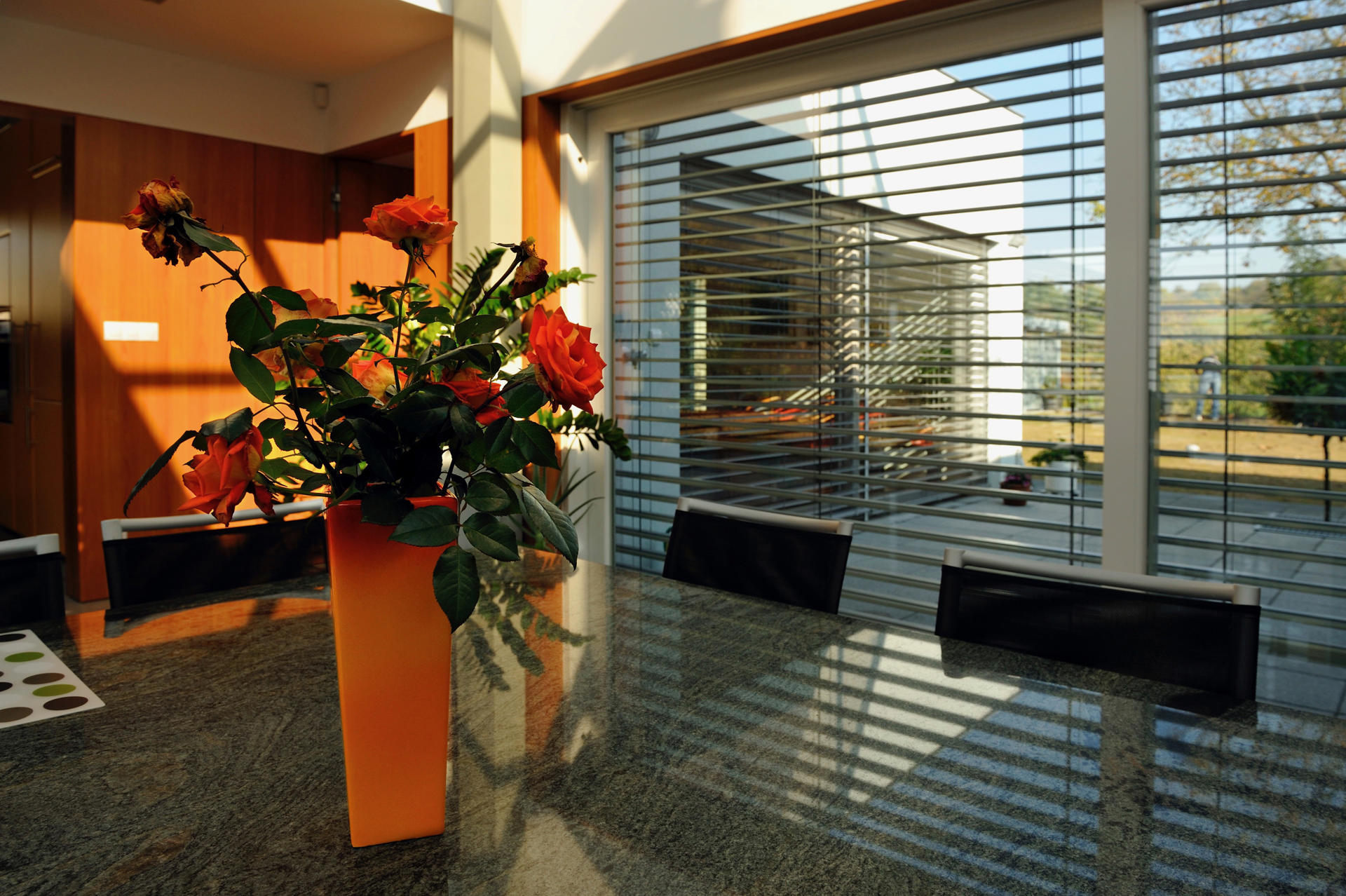
In quality exterior blinds, colour plays not only an aesthetic but also a functional role.
The slats should have a durable surface finish, most often powder coating or anodizing, which protects against UV radiation, rain and minor mechanical damage. You can recognize quality paintwork by its uniform shade, smooth surface and absence of irregularities.
Popular choices today include anthracite-coloured exterior blinds, which match modern architecture and neutral facades, but in terms of quality, colourfastness and resistance to fading are more important than the shade itself. Thanks to the careful surface treatment, blinds retain their appearance and functionality for many years - and this is one of the most reliable indicators of quality workmanship.
5 - Service and availability of parts
Another sign of quality exterior blinds is easy maintenance and availability of spare parts for the blinds. Reputable manufacturers, such as ISOTRA, provide service support even after years and offer components that can be easily replaced if necessary. This ensures that the blinds will function for a long time without the need to completely replace the system.
6 - Price: an indicator of quality and long-term value
As with many other things, the price of exterior blinds often indicates their quality. So, if you are looking for a well-made solution, you can buy smaller manually operated models for around CZK 8,000 for a standard window, while motorized variants with a cover box cost from CZK 12,000 to 18,000.
👉 A “standard window” is usually considered to be a window measuring approximately 120 × 140 cm, i.e. an area of around 1.5–1.8 m².
The price of exterior blinds depends on the dimensions, type of slats, control system and installation. A higher price usually reflects the precision of the design, the materials used and the overall comfort of use.
Tip: If you are choosing new blinds for a pergola, terrace or modern facade, take a look at the ISOTRA exterior blinds offer and treat yourself to blinds tailored to your home.