Why shading affects energy consumption
Windows are the place where the temperature in a house is significantly “out of control”. In winter, heat easily escapes through them, while in summer, the sun quickly heats the entire interior through the glass. Therefore, glazed surfaces play a very important role in the overall energy balance of a house.
Moreover, heat loss often occurs not only through the glass itself, but also in its surroundings – for example, in the area of window frames and window sills. Therefore, not only high-quality insulation of window reveals and window sills is important, but also properly designed shading technology, which helps to limit the flow of cold air and the cooling of these sensitive areas.
Shading helps to naturally balance these fluctuations. It allows you to regulate how much heat and light you let into the interior, and when, on the contrary, you create a protective barrier against cold or heat. Thanks to this, the internal temperature changes more slowly and the household is not exposed to sudden temperature differences.
A great advantage of shading is its predominantly passive nature. Although motor-controlled systems consume a small amount of energy, shading as such works mainly with natural environmental influences and helps regulate the indoor climate with no permanent energy load.
One solution for both winter and summer
In cold months, shading helps to reduce heat loss through glass surfaces. In particular, exterior shading elements create an additional insulating layer at the window, which reduces the flow of cold air and the cooling of the inner surface of the glass. The interior cools down less and the heating system does not have to work with such high power. Proper use of shading, for example by drawing it at night or in adverse weather, can lead to a noticeable reduction in heat loss without affecting the comfort of living.
Shading has even more considerable effect in the summer months. Sun rays that fall directly on the glass can quickly overheat the interior. Exterior shading blocks the sun before it reaches the window, thus preventing the rooms from overheating. The result is a lower temperature inside and less need for air conditioning or other cooling methods. This will have a positive effect not only on electricity bills, but also on the overall comfort of living, because the interior remains more pleasant even during hot days.
What type of shading has the greatest cost-saving potential
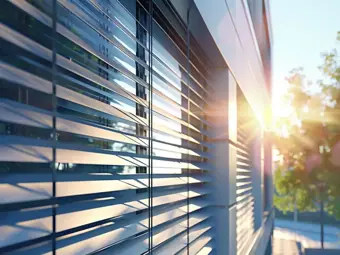
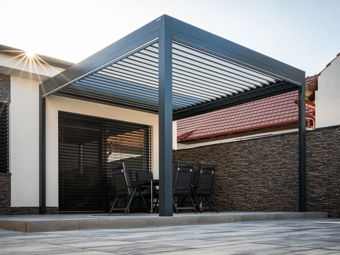
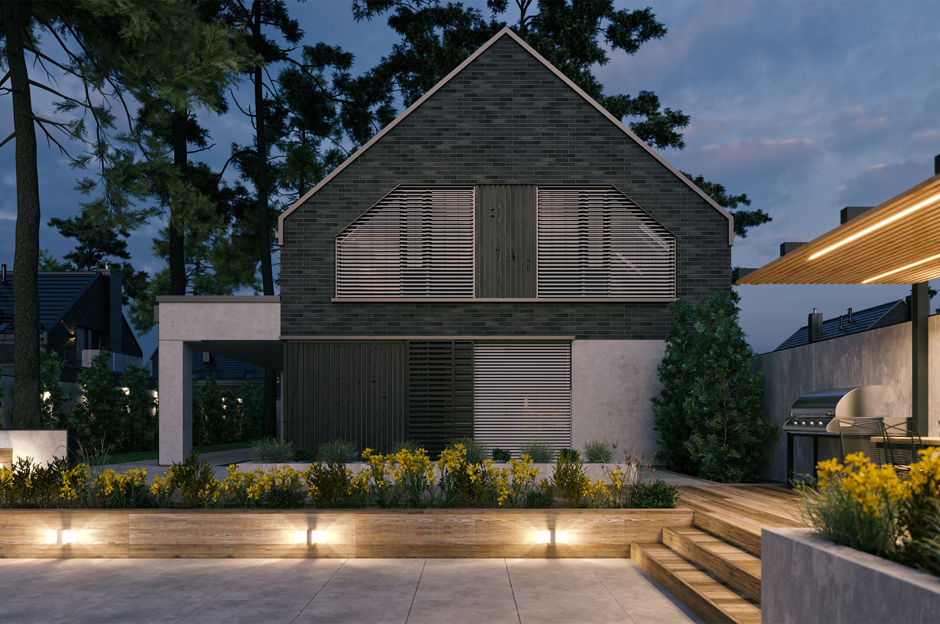
In terms of energy savings, exterior shading systems, such as exterior blinds, exterior roller shutters or screen roller shutters, have the greatest effect. They can regulate the amount of sunlight before it reaches the glass, thereby significantly reducing interior overheating in summer and heat loss in winter.
Individual types differ in the degree of shading and method of use. Exterior blinds allow you to work with light smoothly during the day, exterior roller shutters provide the highest degree of thermal protection, and screen roller shutters represent a compromise between protection from the sun and maintaining contact with outdoors.
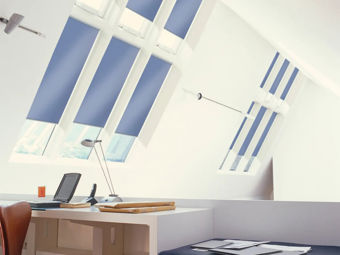
Interior shading, on the other hand, carry out rather complementary function - it improves light comfort and privacy, but its effect on the energy balance of the house is lower. The choice of specific solution should therefore always be based on the type of building, window orientation and method of space use.
| Criterion | Exterior blinds | Exterior roller shutters | Screen roller shutters |
|---|---|---|---|
| Cost-saving effect | high | very high | medium to high |
| Effect on summer comfort | very high | very high | high |
| Effect on winter comfort | medium | high | low to medium |
| Note on use | Light regulation | common in new-built properties | Suitable as an addition to passive houses, Sun protection while keeping the view |
Automatic control as another step towards cost-saving
Automatic control of shading allows the entire system to operate independently and respond to conditions during the day. For example, the shading automatically retracts when direct sunlight begins to fall on the windows, and opens when the sky becomes cloudy or the outside temperature drops. This prevents the interior from overheating, with no need to turn on the air conditioning or think about manual control.
In reality, on a summer afternoon, the rooms remain pleasantly cool even when no one is home. On the other hand, in winter, the system can use solar gains – the shading opens to let heat in, and it automatically closes again in the evening, creating an additional insulating layer at the windows. All this with no need to set or monitor anything.
Automatic control can also be connected to smart home elements. The shading can work with heating or air conditioning and respond to current conditions in the interior. Thanks to the application on your phone, the system can be checked, adjusted or adapted to your own habits at any time – for example, according to your daily routine, working days or holidays.
The result is a household that can adapt itself to the surroundings and lifestyle of its inhabitants. Automatic shading not only brings energy savings, but also a feeling of comfort and a slight "futurism", when the house works for you, and not the other way around.
Shading as a long-term investment
When we look at shading, primarily exterior shading technology, in context, it ceases to be just a question of design or shading windows. It becomes part of how the house functions in everyday operation - how it reacts to weather changes, how much energy needs and what comfort can offer to its inhabitants.
Properly designed shading technology helps maintain a pleasant temperature in the interior all year round, reduces heating and cooling requirements and contributes to a more stable indoor climate. Savings do not arise all at once, but gradually - in the form of lower energy bills, less dependence on technical systems and more comfortable living.
That's why it makes sense to think of shading as a long-term investment that will not only affect the appearance of the house, but above all, how people live in it.