When is the perfect time to start planning a pergola?
Many people only start thinking about a pergola with the arrival of warm weather. At that moment, however, they often mainly decide on a quick solution, not the most suitable one. If you want to have a truly well-thought-out space, it makes sense to start planning in advance – ideally in a period when there is no time pressure for the pergola. That's when you have the opportunity to clarify what type of pergola will suit you, what kind of pergola shading against the sun and rain you will need, and how to harmonize the whole thing with the house and garden so that it works in the long term, not just for one season.
By the way, ISOTRA currently comes with a 10% winter discount on pergolas, which may be another practical reason to start planning right now.
First, get it clear in your mind what the pergola will be used for
The crucial question is: How do you want to use the pergola?
A pergola intended only for short hanging around will have a specific solution, and a different solution will be required for pergola which should serve as a fully-fledged outdoor living room. The purpose of use determines whether you will only deal with light shading for the pergola or a complex system with side protection and light regulation.
In addition to the basic purpose of a pergola, it is also a good idea to think about the conditions in which you want to use it. For example, it depends on how much you mind the low morning or evening sun or whether you plan to stay there even in rain or wind. These are the questions that will naturally lead you to decide on the appropriate shading that will affect the comfort of using the pergola throughout the day and throughout the season.
Pergola shading: a key element of comfort
Without well-thought-out shading, a pergola can quickly turn into a space that is difficult to use, not only during the summer. Therefore, pergola shading does not play a role of a mere supplement, but fundamentally affects the overall comfort and the way you will use the pergola during the day.
Nowadays, there are many options to protect a pergola from the sun depending on the orientation and intended use. Exterior roller shutters for pergolas are very often used, especially screen ones, which effectively reduce overheating without completely suppressing contact with the surroundings. At the same time, they help protect the space from the wind and views from the outside, which significantly increases comfort during everyday use.
In situations where the goal is not only protection from the sun, but also from wind or rain, the pergola can be supplemented with sliding glass. Although this does not primarily serve as shading, it significantly expands the possibilities of using the pergola in colder or unstable weather and contributes to protected and peaceful space.
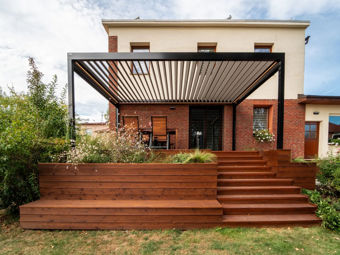
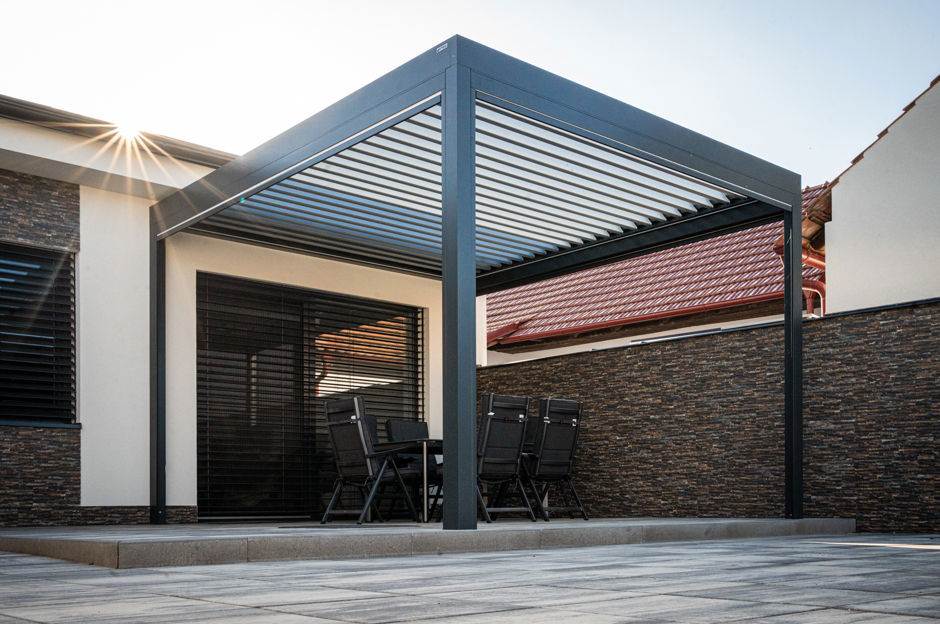
The flexibility of using a pergola is increased by solutions that allow you to react to the weather during the day. In general, you can find different types of roofs - from solid structures to systems that allow you to regulate the amount of light and ventilation. Some pergolas include a system of tilting slats in the roof, thanks to which you can control the passage of light and the drainage of rain according to current conditions. A typical example of this solution are bioclimatic pergolas with slats, such as the ARTOSI system, where light and ventilation control is part of the structure itself.
When the roof solution is supplemented with pergola side shading or other protective elements, a space adapted to weather changes and different ways of use is created. It is the combination of the roof and side protection that determines whether the pergola will be pleasant only under ideal conditions or usable for most of the season.
Type of construction and orientation as the basis of a functional pergola
When choosing a pergola, the material and appearance of the structure are often the main considerations. However, it is equally important to consider what other solution options the given type of pergola offers and how it will work in a specific space. The construction and method of shading should be conceived together, not as individual steps with no mutual correlations.
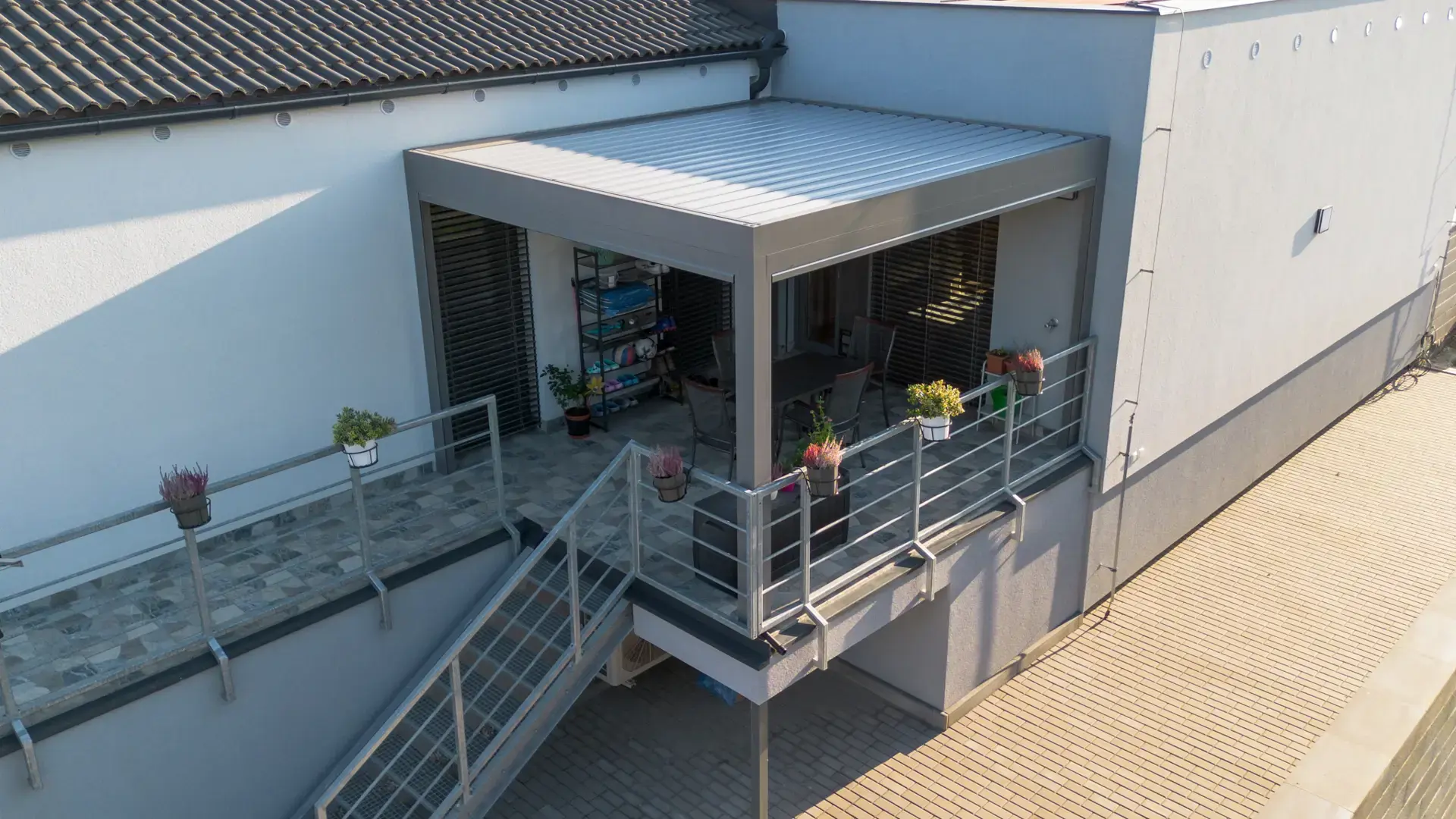
Contemporary pergolas are most often designed from aluminium or as a tailor-made solution that allows them to respond to the specific conditions of the house and garden. It is the individual design that gives the space a better opportunity to work with orientation to the sun, with air flow and with connection to the interior, and at the same time allows for meaningful integration of pergola exterior roller shutters or other protective elements with no need for later compromises.
The orientation of the pergola also plays a crucial role. A space oriented to the south will behave differently, and a terrace facing the west, where low afternoon sun is a problem, will work differently. In some cases, shading from above is enough, in others, the space needs to be protected from the sides as well. That is why it makes sense to consider a combination of shading and wind protection, or adding sliding glass to the pergola, which expands the possibilities of its use apart from the main season.
Summary: non-underestimation of planning your pergola always pays off
A pergola is an investment for many years and its quality is not recognized by the first impression, but by how it is used in everyday operation. If you take into account not only the structure, but also the orientation and pergola shading against the sun when planning, you will create a space that will work in various daily and seasonal conditions. A place you will enjoy returning to – not only in summer, but throughout most of the year.