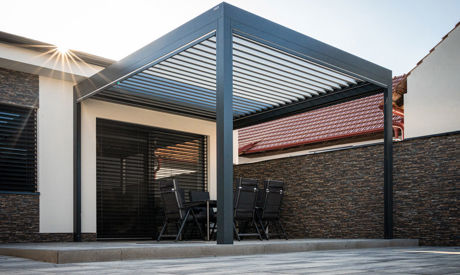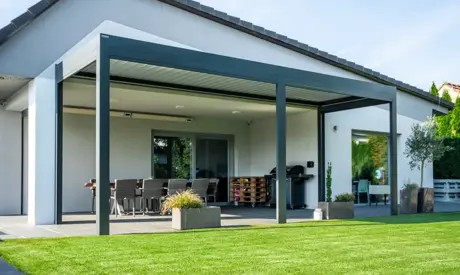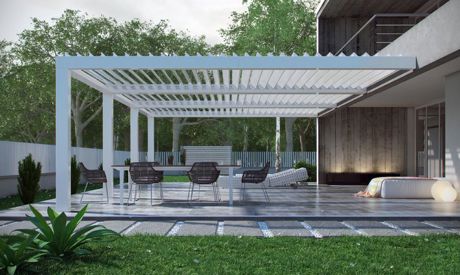
A pergola as a place where families and friends hang out in the fresh air has been recently more and more designed as a part of the house, not just as a separate element in the garden. It becomes a natural extension of the house, a place to relax and work. But if your pergola should really work the way you imagine, you need to think ahead – not only about appearance, but also about technical solutions, orientation and especially shading of the pergola. This is what determines whether you will spend your free time under the pergola all year round.
Do you feel like you won't be able to use your pergola until spring? Wrong, you can spend pleasant time in a pergola even in the autumn or winter months. How to do it?
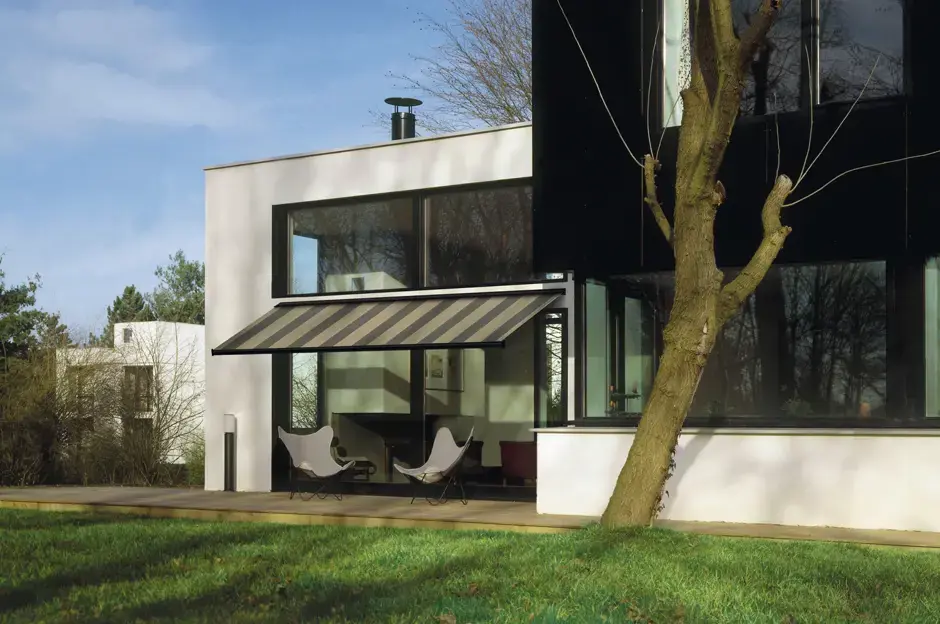
Improving the exterior of your home can have a huge impact on its overall appearance and functionality. Pergolas and awnings are two shading solutions that not only add an aesthetic dimension, but also increase living comfort. In this article, we will look at how pergolas and awnings enliven exteriors and bring new possibilities to your outdoor spaces.
Although the sun sets late in the summer, it would still be a shame to deprive yourself of the opportunity to spend pleasant summer evenings in a pergola, summerhouse or terrace. Outdoor lighting has its own rules - read which safety standards it must meet and how to light even with no electricity.
Have you ever come across the term biophilic? It expresses a love of nature and the need to bring as many natural elements as possible into everyday life. Biophilic design is an architectural approach that connects our living spaces with nature. It’s an increasingly popular trend and a pergola is one of the easiest ways to enjoy it.