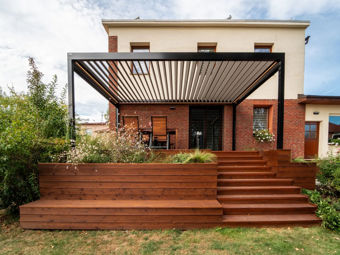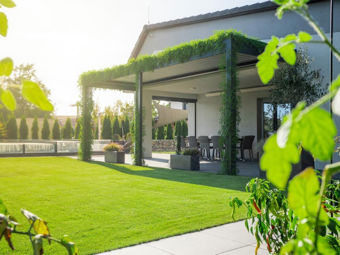
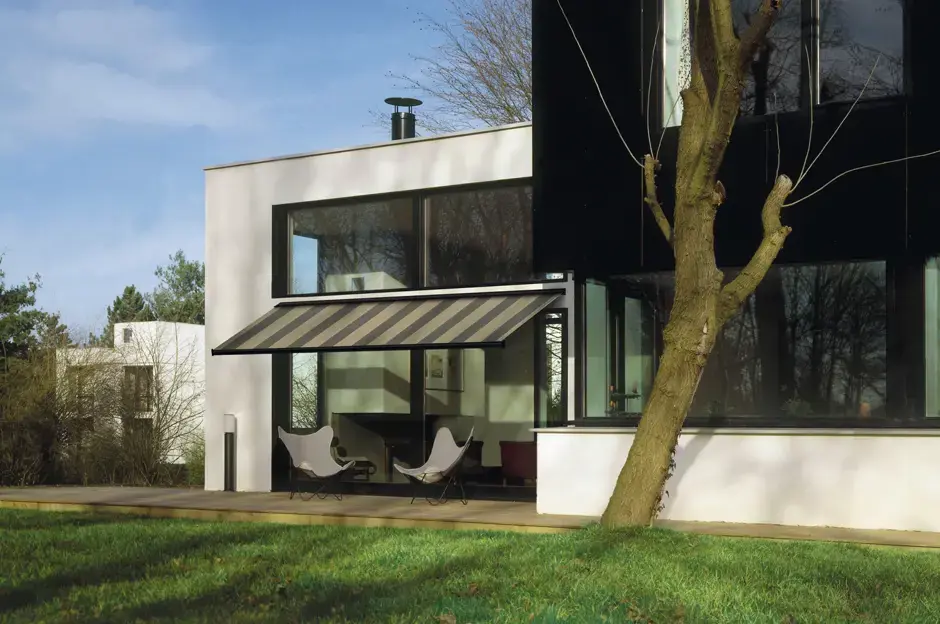
You do not have to worry that maintenance would take you the whole afternoon; an hour once or twice per season is mostly enough, and the exterior shading system (pergola or awning) will serve you well for many years to come.
Why maintenance matters, and what happens if you neglect it
Dirt may not be noticeable at all at first glance. But dust, pollen, and leaves deposit on the fabric gradually and retain moisture in it. Dirt is then likely to damage the surface, causing unsightly stains or unnecessarily shortening the lifespan of the entire shading system. This is another reason why it is good not to postpone maintenance and provide regular care to the awning.
But it is not only about the fabrics. The frame is equally important. In contrast to conventional steel, aluminium does not corrode, but the bolts, connections, and moving parts will be subject to faster wear if dirt accumulates on them over a long period. This is especially true in areas with increased humidity or salty atmosphere.
You should also pay attention to the guide rails and inner mechanisms. As soon as dust or fine dirt deposits in them, the system has to overcome increased resistance when moving. This results in noisier operation, faster component wear, and shortening of the service life of the motor drive.
Cleaning the awning fabric
You certainly do not need to clean the fabric after every rain, but it is advisable to check and clean it following a period of heavy rain, if necessary.
- First, use a soft brush or broom to remove dry dust, pollen, and coarse dirt.
- After that, tepid water, a soft sponge, and a gentle cleaning product free from harsh chemicals should be enough. Avoid bleaching agents, alcohol, and chlorine-based cleaners, as they may damage both the colour and the water-repellent fabric coating.
- After cleaning, leave the awning to dry completely. If you roll it up when still wet, mould is likely to develop.
If the fabric is no longer water-repellent, it is high time to waterproof it. High-quality awning fabrics come waterproofed from the factory, but the protective layer naturally wears away over time. It is generally recommended to impregnate the fabric every 2 or 3 years, depending on the intensity of use and exposure to the sun.
Care of the frame: aluminium, joints, and mechanisms
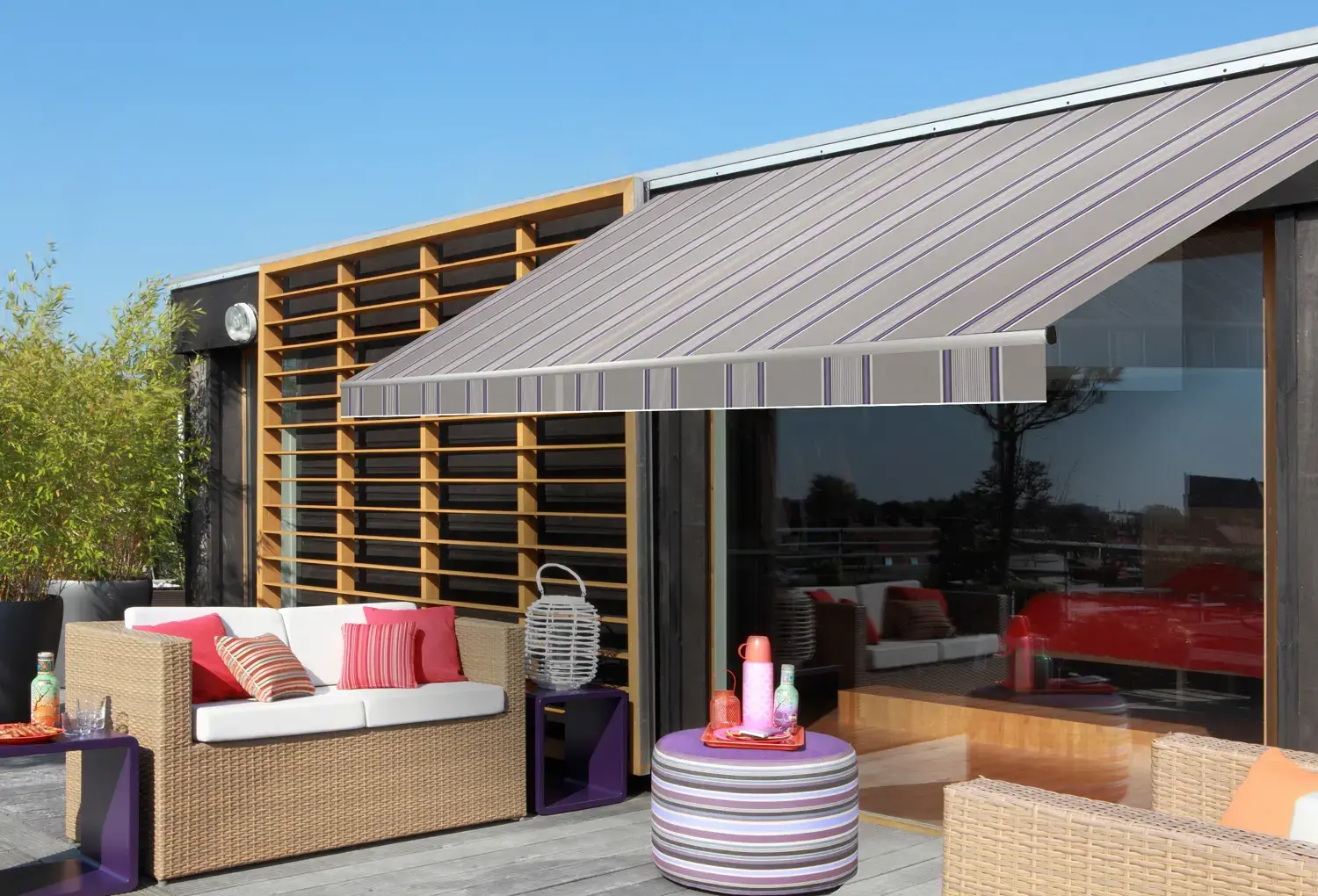
It is usually sufficient to clean the frame with water with some mild detergent. Try to avoid stronger chemicals or abrasives, as they are likely to damage the surface treatment.
From time to time, check the bolts, connections, and moving parts, and if you hear any squeaking or notice uneven movement, it is high time to take action. Minor adjustments are usually enough. Apply silicone lubricant to the joints and travel mechanisms, because contrary to WD-40 or common oils, it does not attract dust and does not leave greasy marks on surrounding surfaces.
If you own a wooden pergola, you need to apply a protective coat to it every once in a while. It depends on the type of wood and the original coating, but it is generally recommended to use quality glaze coats or protective oils with UV filter to protect the wood from humidity and sunlight. Harder and naturally more durable types of wood, such as oak, do not require as frequent treatment as softer types of wood like spruce and pine, for which it is recommended to renew the coating even annually.
Seasonal care
The best time for a thorough check after the winter is before the really hot days arrive. Inspect the frame, clean the fabric, remove leaves from the draining parts, and check if the whole system moves smoothly. The same procedure should be done in the autumn when the summer season has ended. Only instead of pollen, you will deal with fallen leaves, dust, and other dirt accumulated during the season.
This will prepare the shading system for the winter and you will not be unpleasantly surprised in the spring. If the system is driven by a motor, do not forget to check the remote controller in the spring, including the condition of the batteries.
Winterising: what to do with an awning or pergola in the winter
It is clear what to do in case of awnings. The basic rule is: as soon as snow or strong winds arrive, you must roll it up. A layer of heavy snow will likely damage the awning, especially its supporting arms and fabric. You can find the exact load-bearing capacity of the structure under snow loads in the technical documentation for your model. It differs depending on the manufacturer and the type of frame.
Bioclimatic pergolas are much better in this regard, as their sturdier frame will easily withstand normal winter conditions. In a heavy snowfall, however, it is advisable to turn the slats vertically to prevent snow from accumulating on them.
In case of pergolas with glazing or side panels, it is usually enough to regularly check the drains, because when leaves or ice block them, water will not drain properly.
The most common maintenance mistakes
Some mistakes repeat over and over again, and it would be a shame if any of them damaged your awning or pergola.
- Rolling up a wet awning: Humidity inside will create ideal conditions for the occurrence of moulds.
- Use of a pressure washer: A powerful water stream is likely to damage the fabric fibres as well as waterproofing.
- Ignoring the waterproofing restoration: When the fabric does not repel water anymore, it will begin absorbing dirt much more easily.
- Leaving the awning open in heavy wind or storm: Even the best-quality frame is not able to withstand extreme loading.
- Ignoring unusual noises: Squeaking or irregular movement are usually a sign that the system needs adjusting or servicing.
- Failure to perform a pre-season check: A minor technical problem that is left unnoticed will often get worse over the winter and surprise you during the season.
Regular maintenance is not complicated or time-consuming; and it is definitely cheaper than having to buy a whole new system because of a needless mistake.