Material: Aluminum vs. Wood
When you think of a pergola, you probably think of a classic wooden structure. Wooden pergolas are great for older buildings and wooden structures, but they require significantly more work: the wood needs to be painted and maintained regularly, otherwise it will be threatened by mold and wood-destroying fungi.
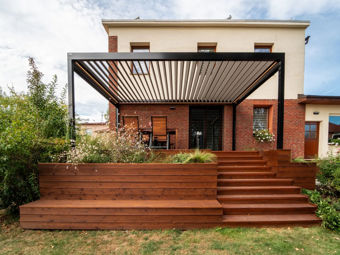
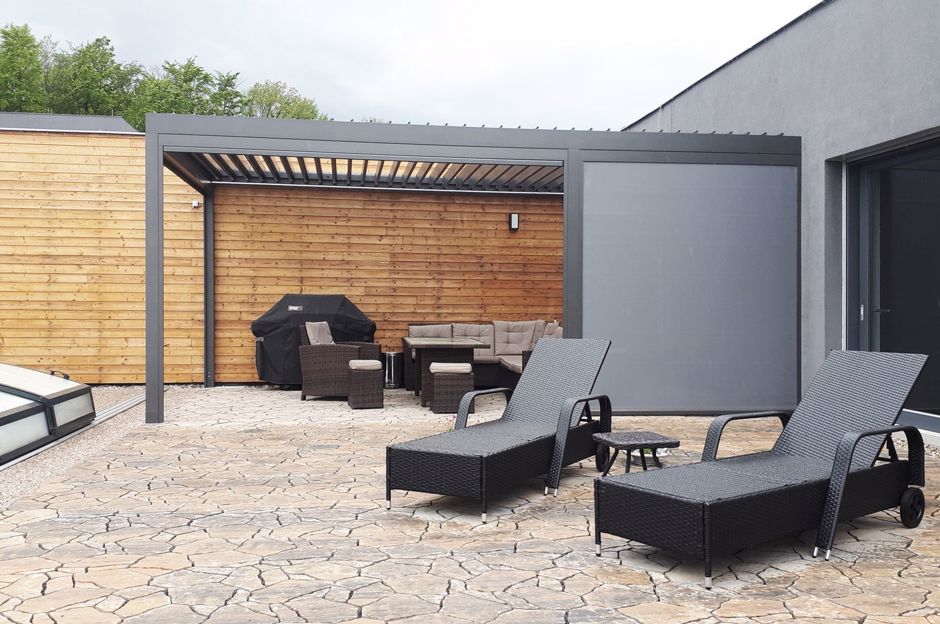
An aluminum pergola may seem like an unusual idea at first. However, it is especially suitable for newer buildings. It is practically maintenance-free and looks luxurious. It also has folding slats, so you won't be caught off guard by the midday sun or a sudden downpour.
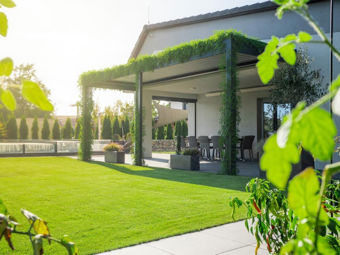
Location: at the house or in the garden
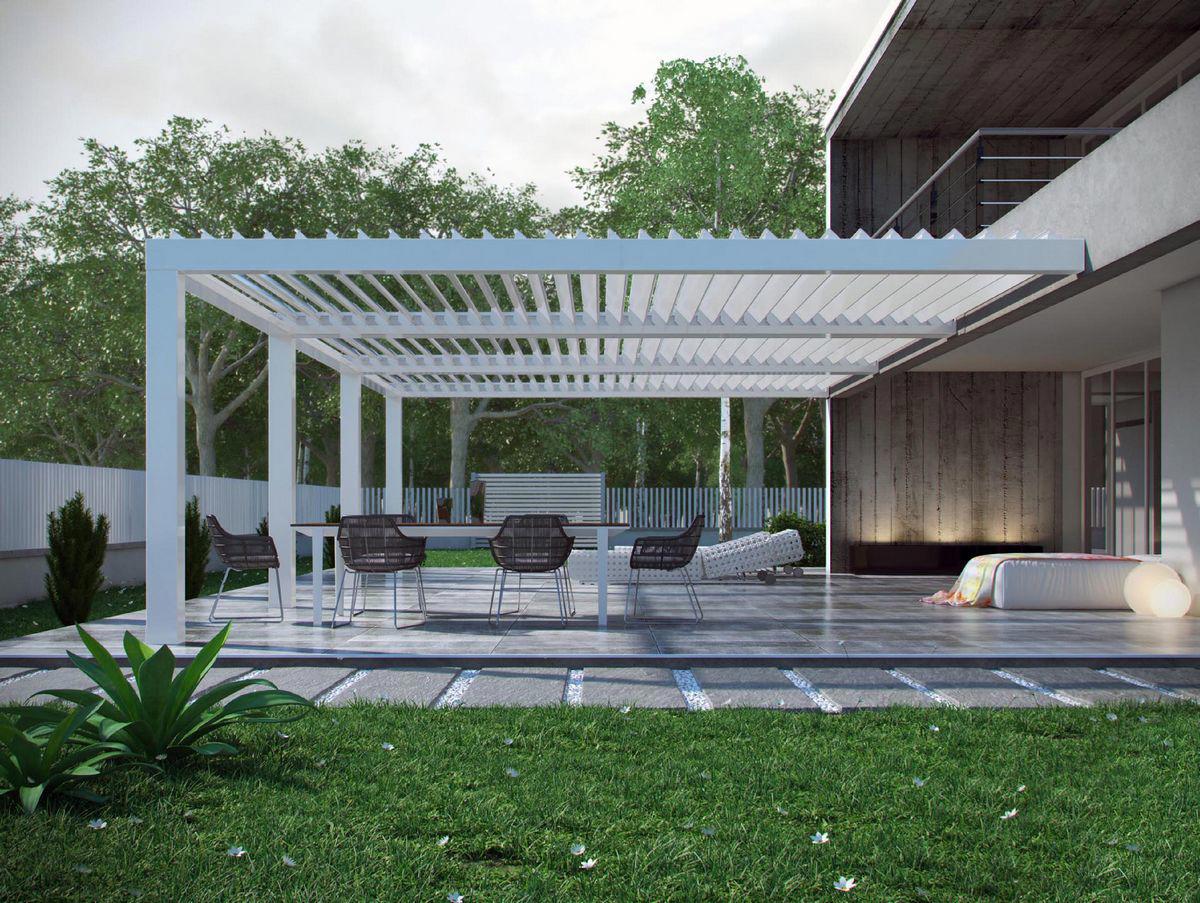
The most common choice is a pergola anchored to the wall. But sometimes this is not possible, for example due to lack of space at the house or because you want to have a retreat in the middle of the garden. Read our detailed article on how to decide where to place a pergola.
Also consider how big the pergola will be. Remember that you will need a building permit for structures over 25 m2 of built-up area. Can you build a pergola yourself?
Pergola Substrate
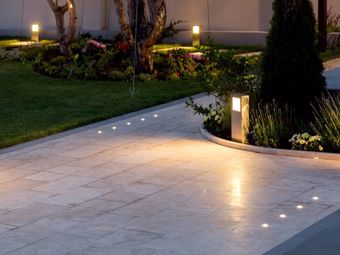
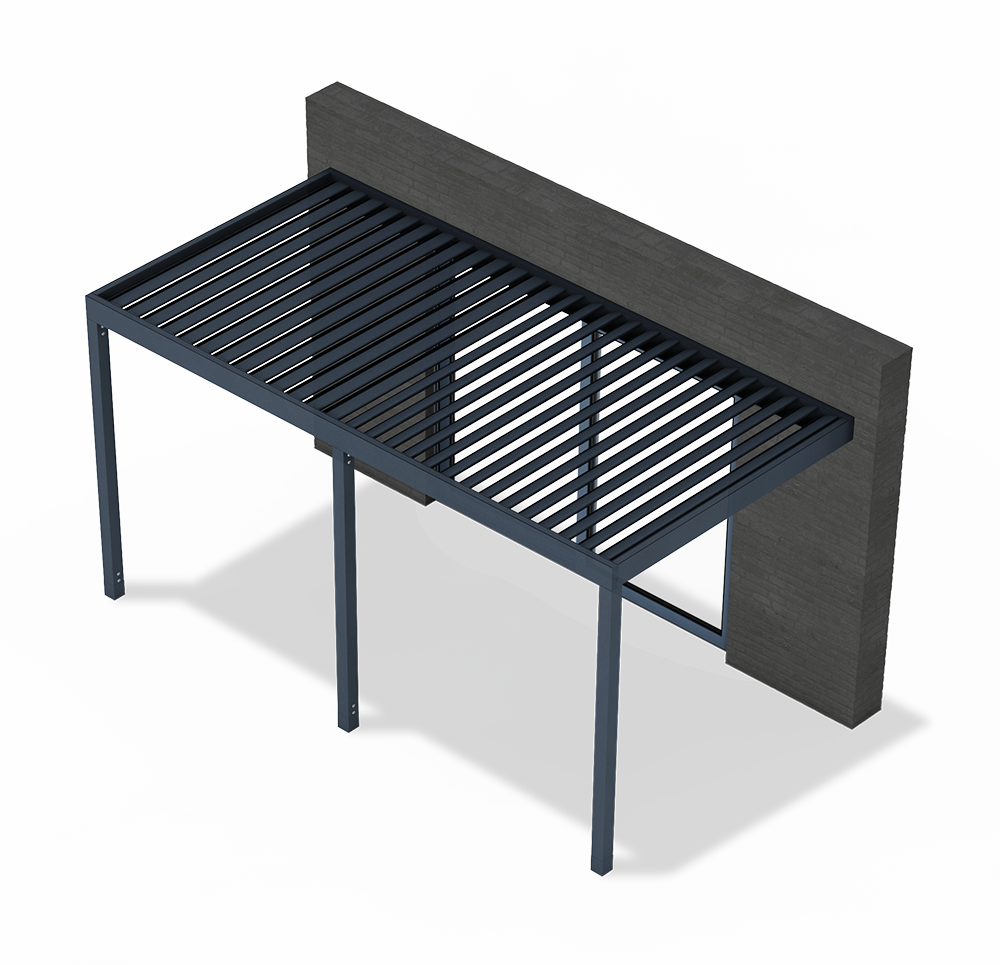
The floor in a pergola should withstand the vagaries of the weather, be sufficiently strong and durable. Of course, appearance and personal preference also play a role. Do you have a swimming pool in your garden? Connect it to the pergola area with a suitable surface.
Lighting, shading and other accessories
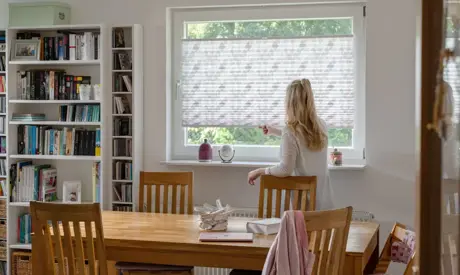
It may seem like a small thing, but it will improve the quality of your stay in the pergola and expand the possibilities of its use. Integrated lighting is useful for the shorter autumn evenings, and additional side shading against the harsh rays of the setting sun. The approaching autumn does not mean that the pergola season will end soon. Enjoy autumn in the pergola!